

Madame Chiang Kai-shek – 蔣介石夫人 – (1898-2003)
(Mei-ling Soong)
Mei-ling Soong was born around 1898 in Shanghai, the fourth of Charles Soong’s six children. Charles Soong had been educated at Vanderbilt University on a missionary scholarship, and Mei-ling’s mother was among the first girls in China to receive an education. In 1910, thirteen-year-old Mei-ling joined her older sister Ail-ling at Wesleyan College in Macon, Georgia, studying with private tutors. In 1917, Mei-ling graduated with honors from Wellesley College, with a major in English and a minor in philosophy.

Back in China, her older sister Ching-ling Soong had married Sun Yat-sen. Mei-ling found herself courted by Chiang Kai-shek, whom she married in 1926, with the stipulation that he divorce his first wife, study the Bible, and give her control over her fortune. Mme. Chiang became the dynamic speaker and fundraiser for the Kuomintang’s government, while her older brother, Tse-ven Soong, was the government’s finance minister.
In 1943 Mme. Chiang visited President and Mrs. Roosevelt and addressed the houses of Congress. She was Time Magazine’s “Most Admired Woman of the Year.”
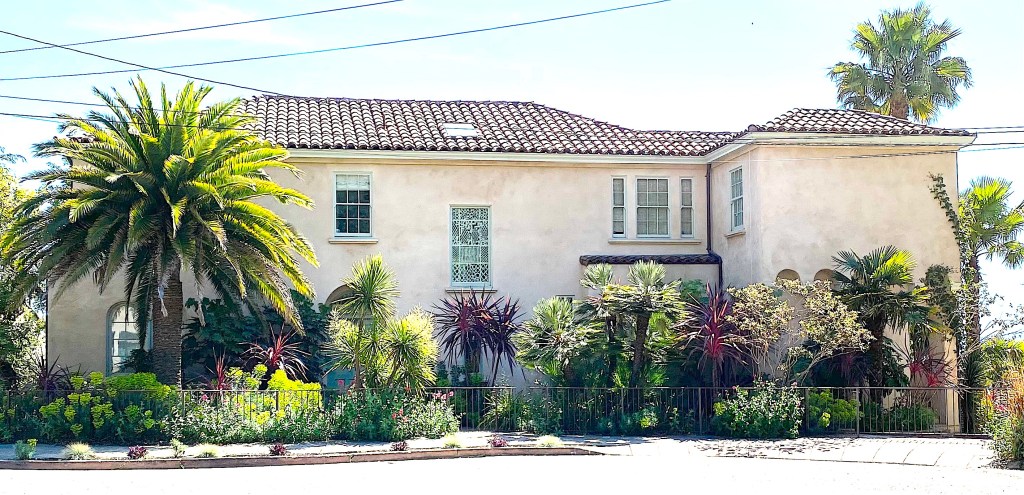
Already in 1942, Mme. Chiang had started renting a house on Avalon Ave. in Berkeley (overcoming initial racial objections by neighbors) in order to be near her dermatologist and San Francisco relatives. In 1945, her brother Tse-ven Soong bought 2916 Avalon.
This became Mme. Chiang’s part-time residence, and a place where she entertained members of the Taiwanese government. When Chiang Kai-shek died in 1975, Mei-ling sold the house and moved to the family estate on Long Island.
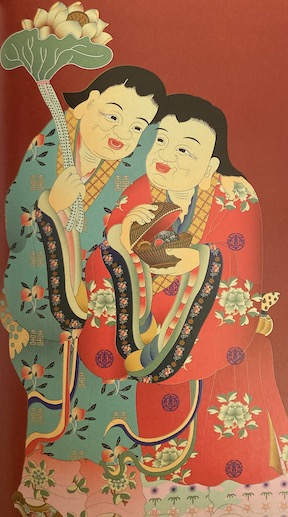
Eileen Chang-張愛玲- (1920-1995)

In 1969, Professor Shih Hsiang Chen (see UC Berkeley) invited to the Center for Chinese Studies (established in 1957) at the University Eileen Chang, a Chinese early modernist writer. At the Center Chang did research of one of the Four Great Chinese Classical novels, i.e., Dream of the Red Chamber. Upon Professor Chen’s untimely passing in 1971, she left the Center and eventually settled in Southern California. Eileen Chang came to prominence in China early in her writing career when in Japan-occupied Shanghai she published several novellas, Love in a Fallen City” among them. “Her sad, bitter love stories gained her a large, devoted audience as well as critical acclaim” (Encyclopedia Britannica).


Billy Wong (Bong Way Wong)
Bullfighter
By brother, Art Wong
My father, Yuen Cham Wong, immigrated from China in the 1920s, first to Los Angeles and then to Nogales, Arizona, to run a grocery store. He and my mother had five children in Nogales.
My father began to feel like his children were losing their Chinese identity and wanted to take them back to China. On their way back, they came through San Francisco to visit friends—then the Japanese invaded China. So the family decided to stay. Berkeley is where I, Art Wong, was born.
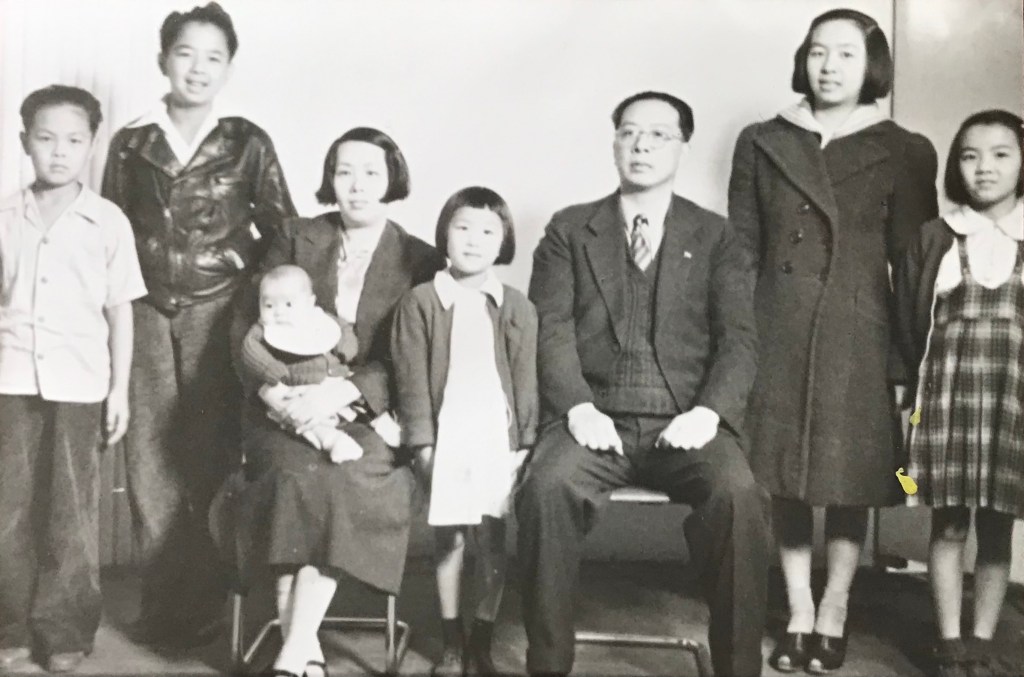
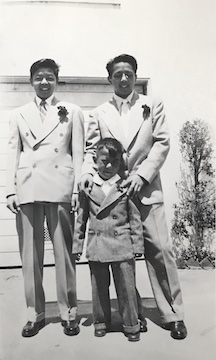
They moved to Berkeley, in hopes of having their children attend UC Berkeley. Using the children’s names, my parents were able to purchase land at Chaucer and San Pablo, where Father built a grocery store with apartments above and a duplex on the back of the lot.
My father passed away just after I was born. My mother was busy with small children and not very business-oriented, so she mainly lived off of rental money and intermittently rented the grocery store out. After regular school, we all walked across town to Chinese school at the Berkeley Chinese Community Church. Florence, Billy’s sister, ended up marrying a minister of the Church, and Rose, another sister, became a lifelong church member, playing piano for the church.

Jack and Billy attended UC Berkeley, studying engineering. They both ended up getting government jobs, because in those days private companies would not hire Chinese. Jack moved to Los Angeles, working for the LA Water District and pursuing hobbies of Bolero style singing and horseback riding. Billy and Florence helped out in the family grocery store after finishing work at their day jobs.
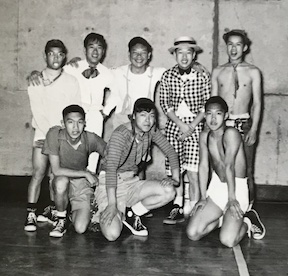
Billy was always very athletic, and had a natural talent for all of the sports he tried. He was a member of the Berkeley Chinese Community Church basketball team and Berkeley High School teams.
At around the age of 30, Billy Wong decided to drastically shift careers—he stopped working as an engineer CalTrans’ predecessor and moved to Spain to become a bullfighter. It’s likely that the influence of Mexican culture during his childhood in Nogales, Arizona sparked his interest in the sport.
Bullfighting is a Spanish sport steeped in tradition, which normally requires an apprenticeship starting at a very early age. Somehow, Billy, an American of Chinese heritage, at the age of thirty, broke into the sport, catching the attention of world-wide press.
Becoming a bullfighter in Spain was extremely unusual for an outsider, as the sport was tied up in Spanish nationalistic identity. Billy lived a very austere life in Spain as he persevered to break into the sport, requiring financial support from his siblings. He managed to impress a well-connected bullfighting manager enough to get into a few public bullfights. Billy’s Chinese heritage drew a lot of attention from the press, but made him an outsider, and ultimately he was unable to get enough work to succeed as a bullfighter. Realizing his career in Spain would not go forward, he moved to Mexico to try bullfighting there. He found little hope to break into the sport there either, and made plans to return home to Berkeley. Unfortunately, before he could, he died in a car crash in Mexico in 1969.
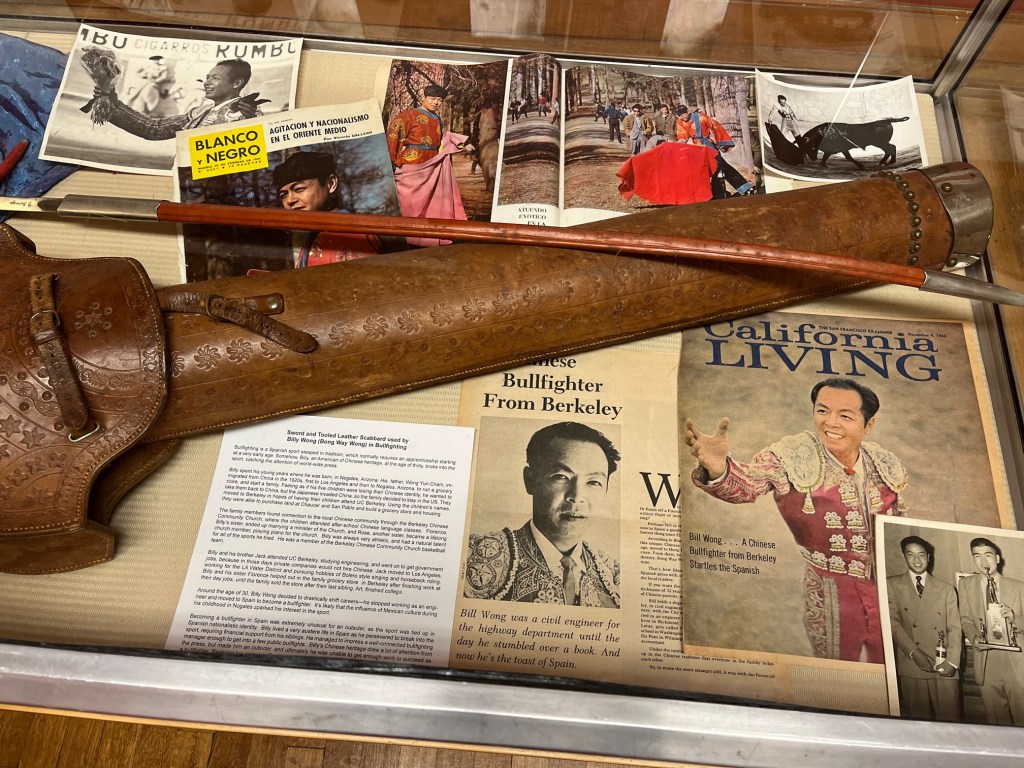
Sword and Tooled Leather Scabbard used by Billy Wong

Ah-Lan Dance Studio

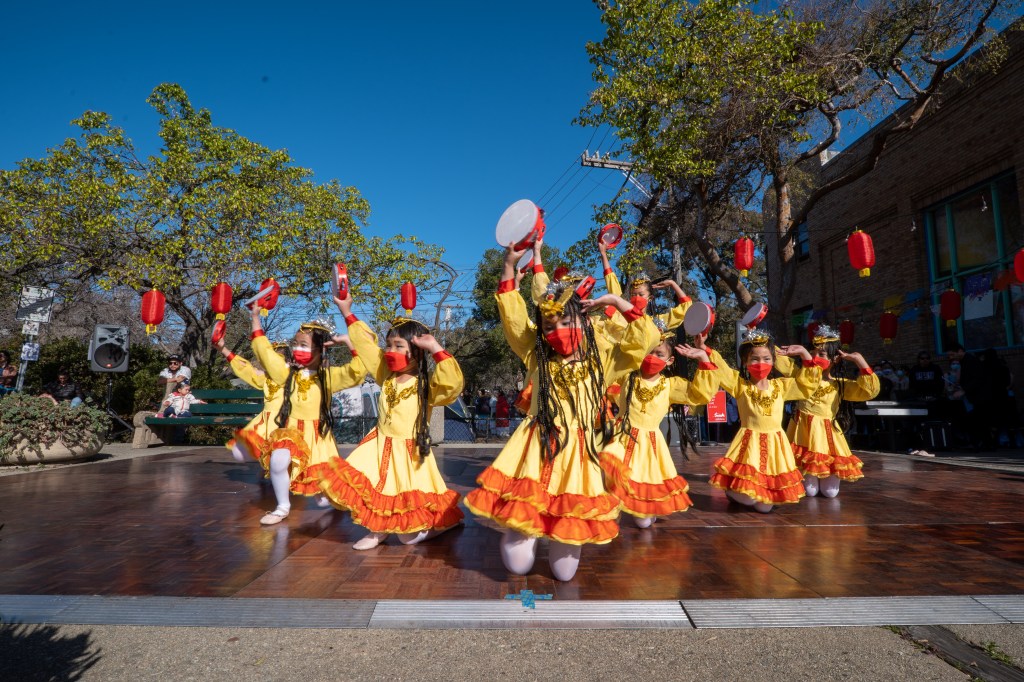

Ah-Lan has been teaching adults and children in and around Berkeley for fifteen years, giving performances with her dancers from Ah-Lan Dance studio. These photos are from the studio’s annual Chinese New Year’s dance celebration on Solano Avenue.
Ah-Lan originally came from China, where she graduated from the Hangzhou School of the Arts, and performed with the Hangzhou Dance Troupe. With her husband and children, Ah-Lan eventually settled in the Bay Area in 1993. Wanting to share her love of Chinese dance with the local Chinese community, in 2007 Ah-Lan initiated her “Chinese Arts and Culture Program,” and in 2013 she started her own Ah-Lan Dance studio, which trains children and adults in Chinese dance traditions.

Dragon Boats
Since 2014, the dragon boats of the East Bay Rough Riders, a youth dragon boating team home to students from Berkeley High School (BHS) and El Cerrito High School (ECHS), have flitted across the iridescent water of the Berkeley Marina.
The team was founded by Coach Lawrence Pang, a math teacher at ECHS. The sport of dragon boating first originated over 2,500 years ago in China. Every year on the fifth day of the fifth month of the Chinese lunar calendar is the Dragon Boat Festival, known as Duan wu Jie. Nowadays, dragon boating is popular not only in its original home of China, but worldwide.


East Bay Rough Riders
“[In] what other sports can you just hang out with seals, fish, and manta rays? We saw a shark once,” said one team member. In addition, the sunsets are absolutely stunning: “You feel like you’re part of the sunset, you can see all the bridges, sunsets, it looks like there’s a glow stick poured out onto the water.”
Dragon boating depends on the team’s ability to paddle in rhythm. “It’s really a whole lot about teamwork,” said a Rough Rider.“We like to say we’re first in friendship, and I’d rather be first in friendship than come first in any race.”
Edited version of an article by Mateo Tsai, Berkeley High Jacket, May 22, 2022, Photos by Nolan White

- By Jeanine Castello-Lin, George O. Petty and Art Wong.
 BHSM Online Exhibits