
F. S. Louie Restaurant Supply Company (Berkeley, 1950s-1990s)
The F. S. Louie Restaurant Supply Company operated out of Berkeley from 1952 until it closed in the late 1990s. Because the USA had a politically motivated embargo with China from 1950-1972, F. S. Louie had the dishes manufactured in Japan [an inexpensive country for manufacturing following WWII] and imported the dishes to be used at Chinese restaurants across the USA, including Arizona, California, Colorado, Hawaii, Idaho, Illinois, Ohio, Oregon, Pennsylvania, Texas, Utah, Washington, Washington, DC., Florida, Maine, Maryland, Massachusetts, Michigan, Virginia and Wisconsin.
Louie was one of only two distributors of restaurant wares in the USA in the mid 20th century. In later years, the company originally designed and developed a line of dishes which were manufactured in the USA. Lorraine Louie tells the story of her father’s here.

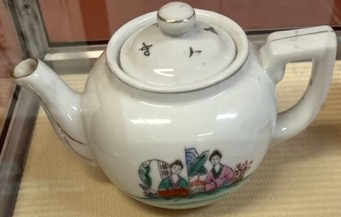
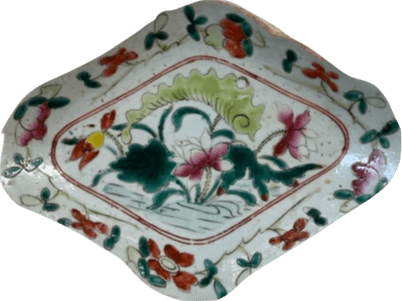
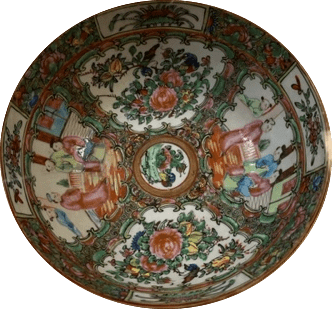
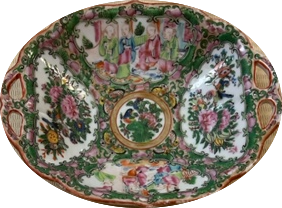
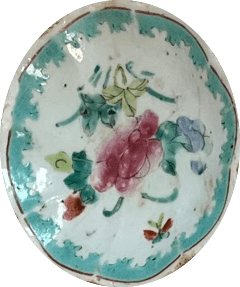
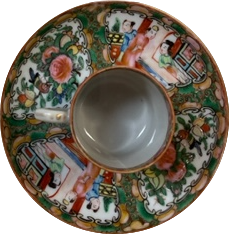
The dishes had a variety of traditional Chinese patterns, such as God of Longevity, dragon and phoenix, birds with flowers, and women or characters in scenes. Dishes were also customized to include restaurant names and addresses.
Examples of ceramic dishes from F. S. Louie Restaurant Supply Company (Berkeley, 1950s-1990s):


Who invented the Chinese “takeout box?”
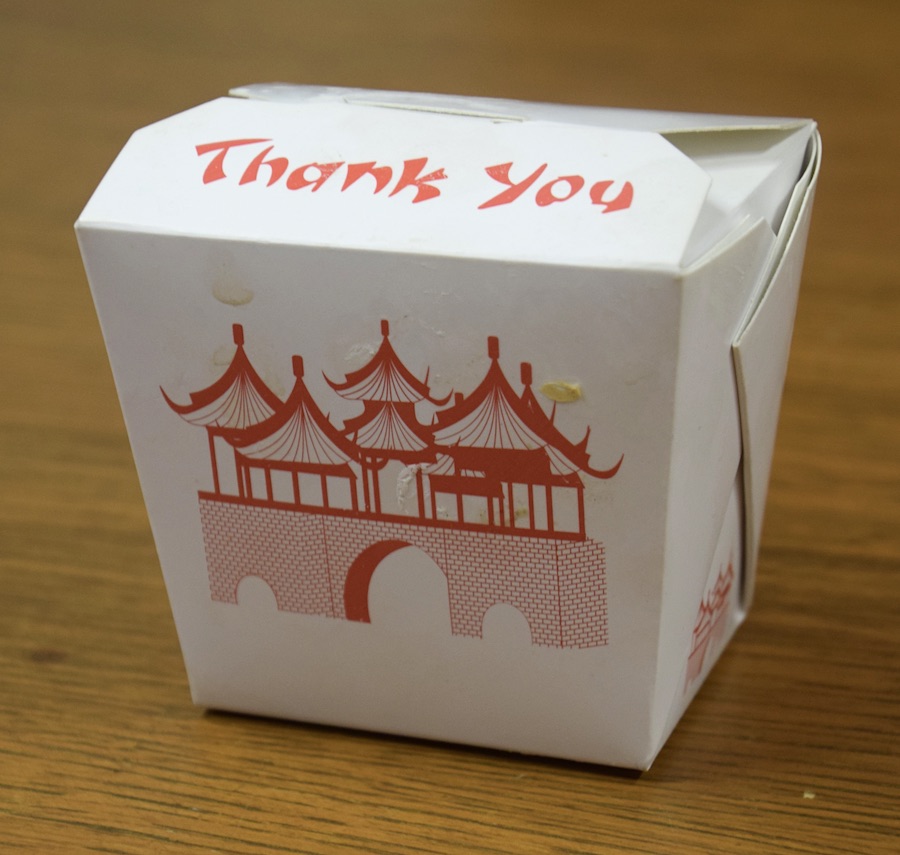
The earliest version of the Chinese takeout container was patented by inventor Frederick Weeks on November 13, 1894. He called it a “paper pail.” It was made from a single piece of heavy paper folded into a virtually leak-proof container and secured with a wire hanger. Decoration printed on the side soon appeared. The folding may have been akin to the Japanese origami folding technique. The wire handles disappeared when folks started microwaving the containers.

Chinese Plates: Origin and Symbolism
From the private collection of John Aronovici





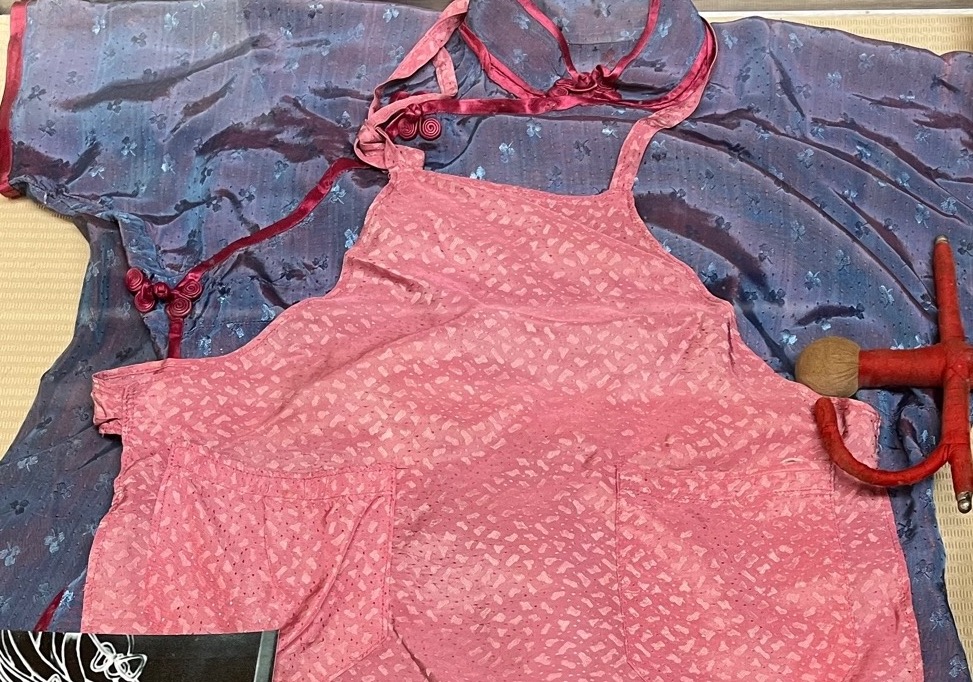
Cocktail Waitress Uniform of Jackie Kee1, hand sewn
By Aimee Baldwin
Some time leading up to WWII, after the shifting away from the 19th century idea of Chinese as dirty foreign invaders, into a new idea of Chinese as benign or exotic allies, there was sort of a golden era of Chinatown nightlife, clubs and bars. My grandmother got jobs working as a cocktail waitress in Chinese, Asian, or Tiki themed restaurants, as it paid well with tips but was easier than being a full dinner service waitress.

Jackie Kee (right) as waitress standing next to patrons, Los Angeles, 1940s
- More on Kee Family ↩︎
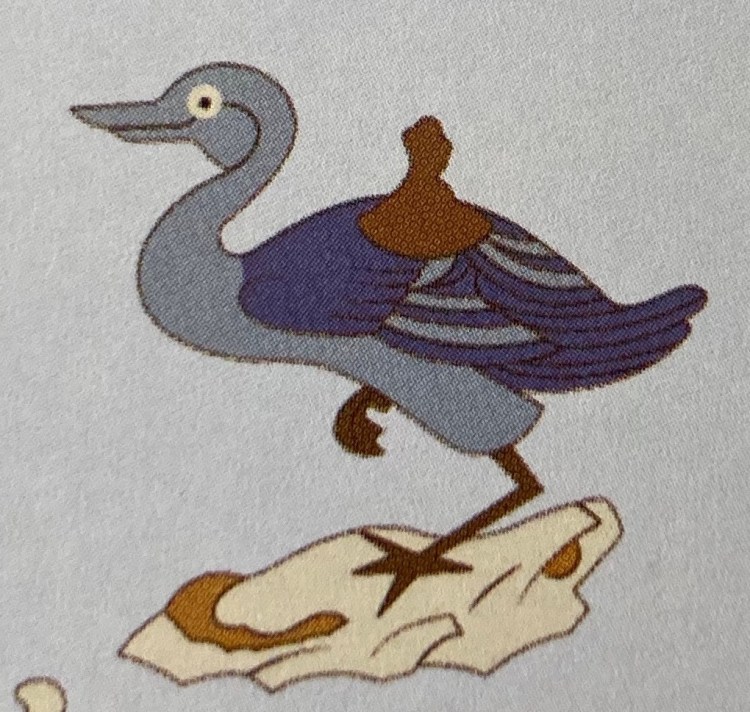
Origins of American-invented Chinese foods
By Aimee Baldwin
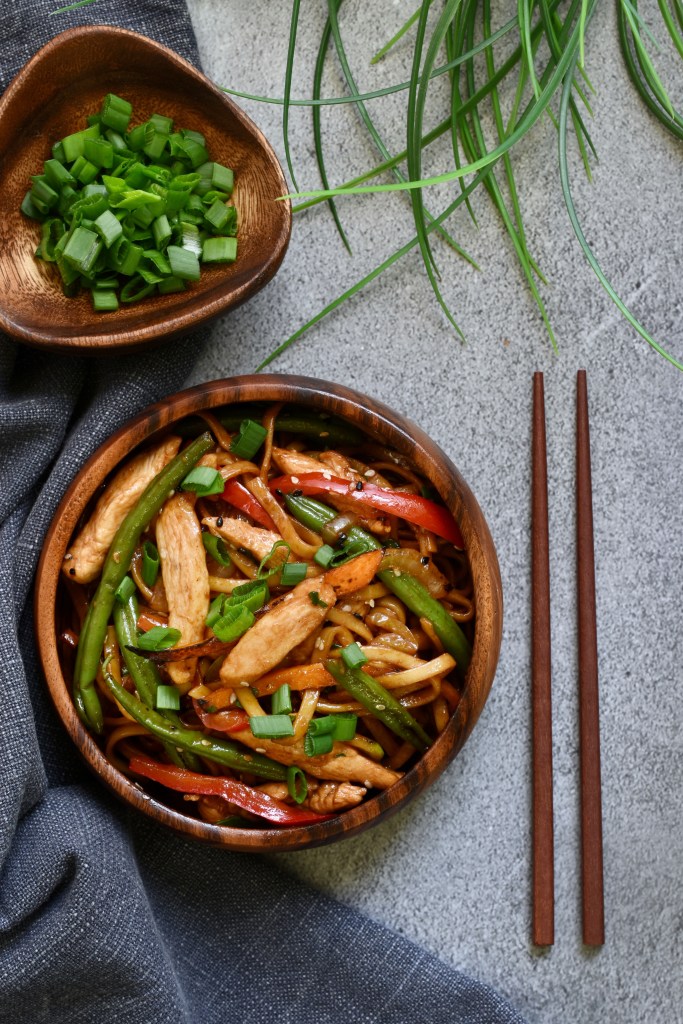
The first Chinese restaurant in the United States is credited to the Canton Restaurant opened in San Francisco in 1849. Chinese food establishments were then referred to as “chow chow houses” and grew in popularity largely due to their cheap prices and good food.
American Chinese food also used vegetables that were originally not available in China, such as broccoli, tomatoes, carrots and yellow onions.
 FORTUNE COOKIES originated in San Francisco’s Tea Garden in Golden Gate Park. The owner of the tea garden began handing out cookies with thank-you notes hidden inside.
 CHOP SUEY was invented in America by Chinese immigrants, and it translates roughly to “leftovers” or”odds and ends.” Credit is given to New York City Chinese-American immigrants.
 ORANGE CHICKEN was invented by a Panda Express chef in America as a variation on another highly popular Chinese-American dish, General Tso’s chicken.
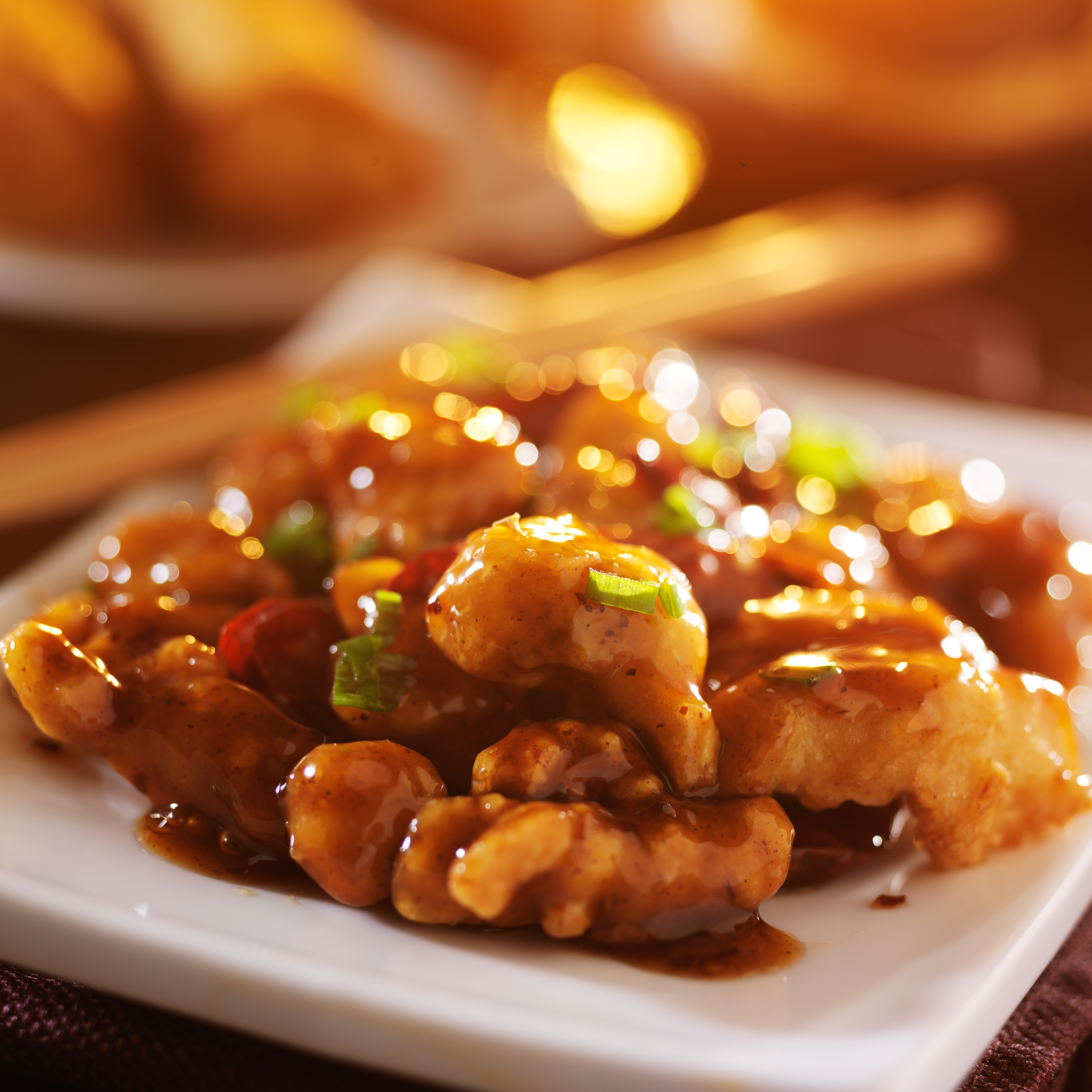 GENERAL TSO’S CHICKEN was created by Taiwanese chef Peng Changkuei in the 1950s. The dish was introduced to Americans when Changkuei served it to a group of US soldiers and then later brought it to his own restaurant in NYC.
 CRAB RANGOON, which is fried pastry shells filled witih cream cheese and imitation crab, appeared on the menu at Trader Vic’s Chow, a Tiki bar and restaurant in San Francisco.
 EGG ROLLS stem from Cantonese cuisine but adapted in NYC in the 1930s as an American version of Chinese spring rolls.
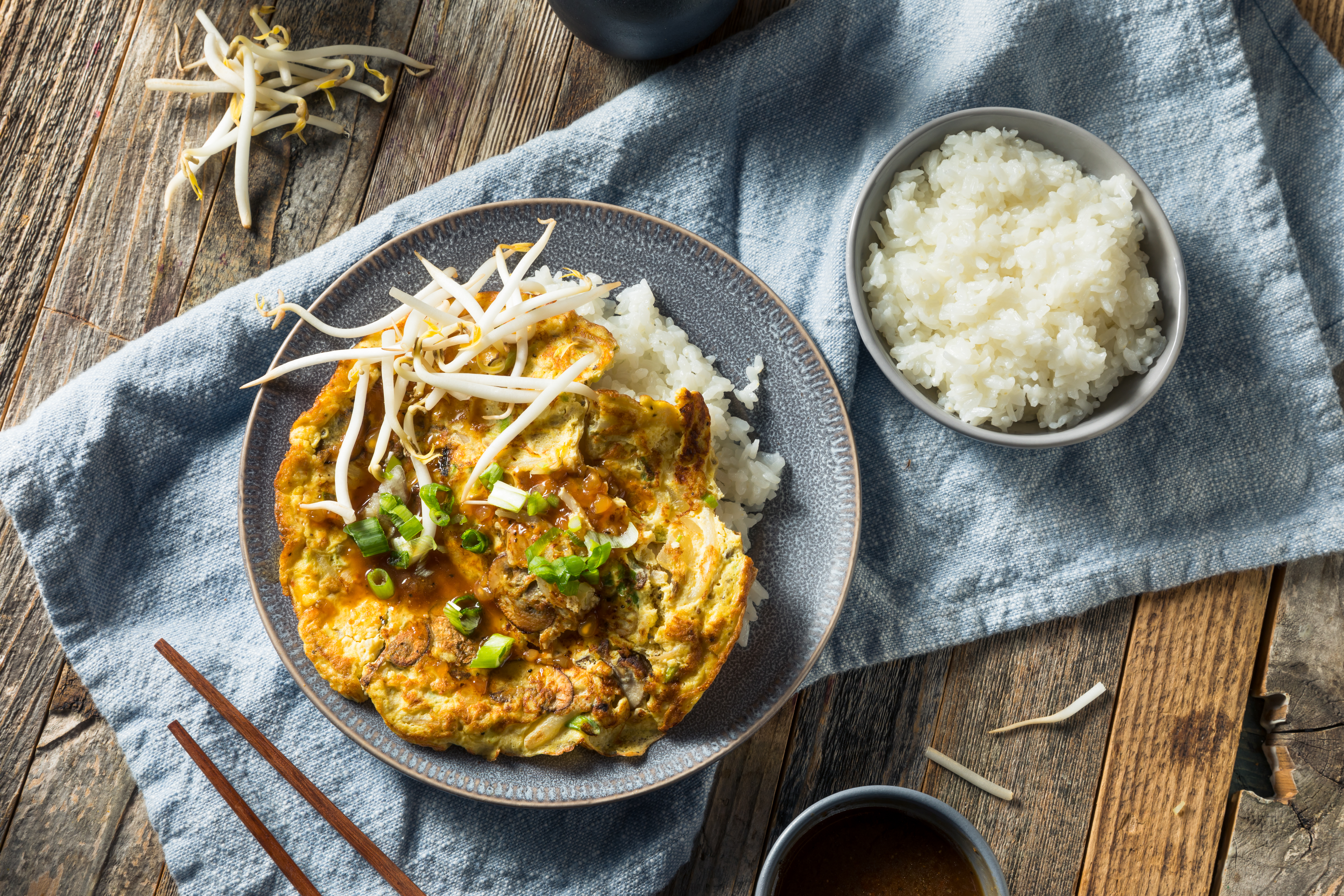 EGG FOO YUNG was an American adaptation of a Cantonese banquet dish, fu yung.

Chinese Family and Food
by Marilyn Kwock
 I am third generation in the U.S.: three grandparents came from southern China and one was American-born. They settled in the East Bay (my father’s side) and the Sacramento Delta (my mother’s side). My parents spoke different Cantonese dialects, but understood each other. I learned some Cantonese as a child, but lost most of it when I started school. Most of the Cantonese words I kept were for food.We were raised with both Chinese and American traditions in Berkeley during the 1950-70s. Christmas was celebrated with lay see (the red envelopes containing good luck money), a tree, gifts, carols, and weekend visits to relatives with potlucks of both Chinese and American dishes. At Thanksgiving we had a big roast turkey stuffed with Chinese sticky rice dressing. In those days, you couldn’t get Chinese ingredients for the dishes in the East Bay, so we would make all-day trips to San Francisco. I tagged along as a bag holder while mom shopped in Chinatown’s tiny shops and crowded sidewalk stalls. I now fondly remember slipping through the crowds, Cantonese words swirling around me, and eating at a restaurant owned by people from the same village in China as my grandmother.
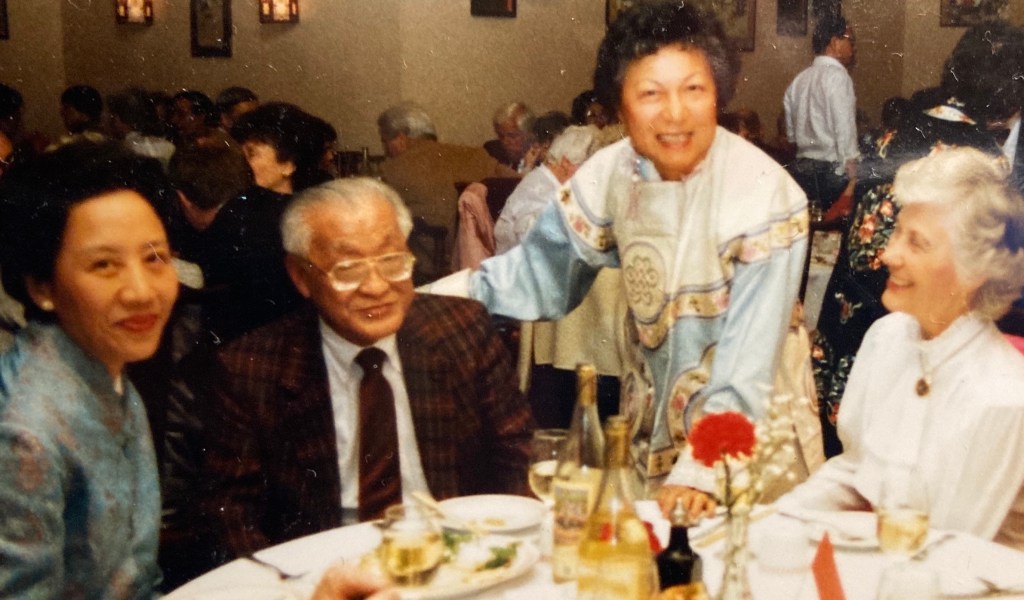

Over time, northern style Chinese restaurants have become more prevalent in Berkeley, but the flavors are quite different so I still go to Chinatown for Cantonese foods. It seemed that all our Chinese friends had their own versions of joong—rice and meat packets wrapped in bamboo leaves— or Chinese chicken salad, or a particular meringue and pineapple shortcake. Now I like to consult with other Chinese-American friends to get the flavors right—making an authentic dish and bringing it into our families helps us feel stronger and more connected as a Chinese-American community. This continues to be a process of discovery for me.


 BHSM Online Exhibits