
Japanese Americans opened a variety of businesses in the first half of the twentieth century. The map below shows thriving grocery stores, florists, laundry businesses, shoe repair stores, and nurseries in 1940. Due to wartime incarceration, many of these stores were lost or changed ownership.

Berkeley’s Bountiful Markets: Japanese Americans in Fresh Food Retailing
Since the turn of the twentieth century, Berkeley and many of California’s Japanese American communities have had ties to Japanese-owned farms in California. In 1942, the California Farm Bureau estimated that nearly 40 percent of the fresh produce grown in California was produced by farmers of Japanese descent.
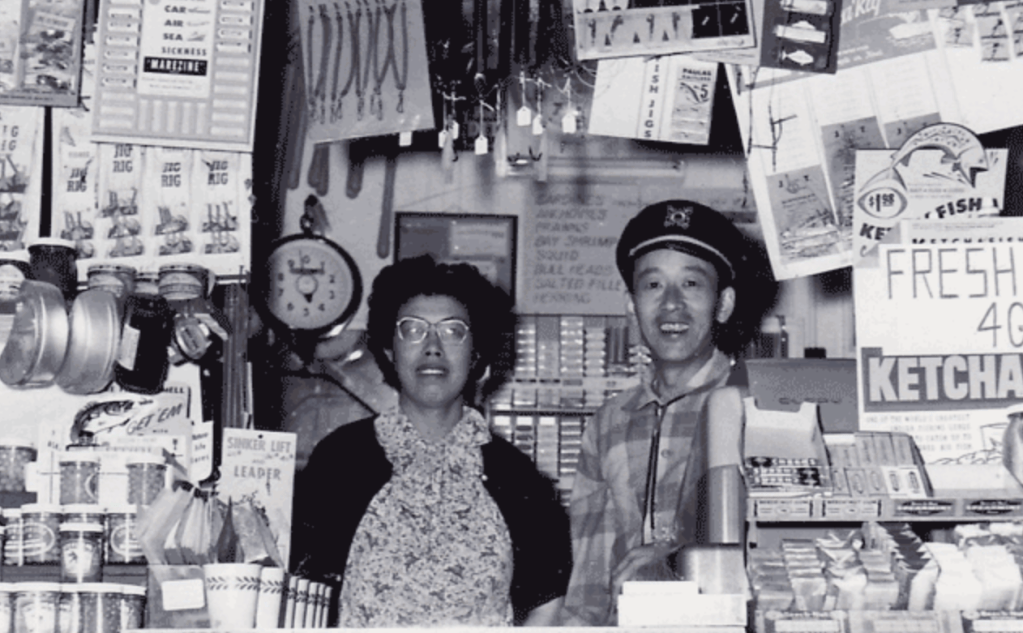
In the 1950s, husband and wife Isamu and Tazuye Fujita owned a fishing bait shop on San Pablo Ave. In 1963, they relocated to 1220 San Pablo Ave. and opened Tokyo Fish Market, now selling fresh fish as well as fresh produce and Japanese dry goods. In 1990, Lee (Cubby) Nakamura joined the Fujitas’ son Larry in expanding the store, eventually building a new 5000-square-foot space at the rear of the lot.
In addition to Tokyo Fish Market, Japanese Americans could find Japanese ingredients in small neighborhood markets such as Koide’s Grocery, at 1715 Ward. The Koide family, who lived at the same address, opened their business before the war and were able to return to their home and business after being incarcerated in Topaz.
In post–World War II Berkeley, one of the key figures in selling fresh produce was Teruo (Tay) Nobori. After the war, Tay started his first market, T & T Market, located at Adeline and Woolsey St., with Tomoru (Tom) Fujimoto.
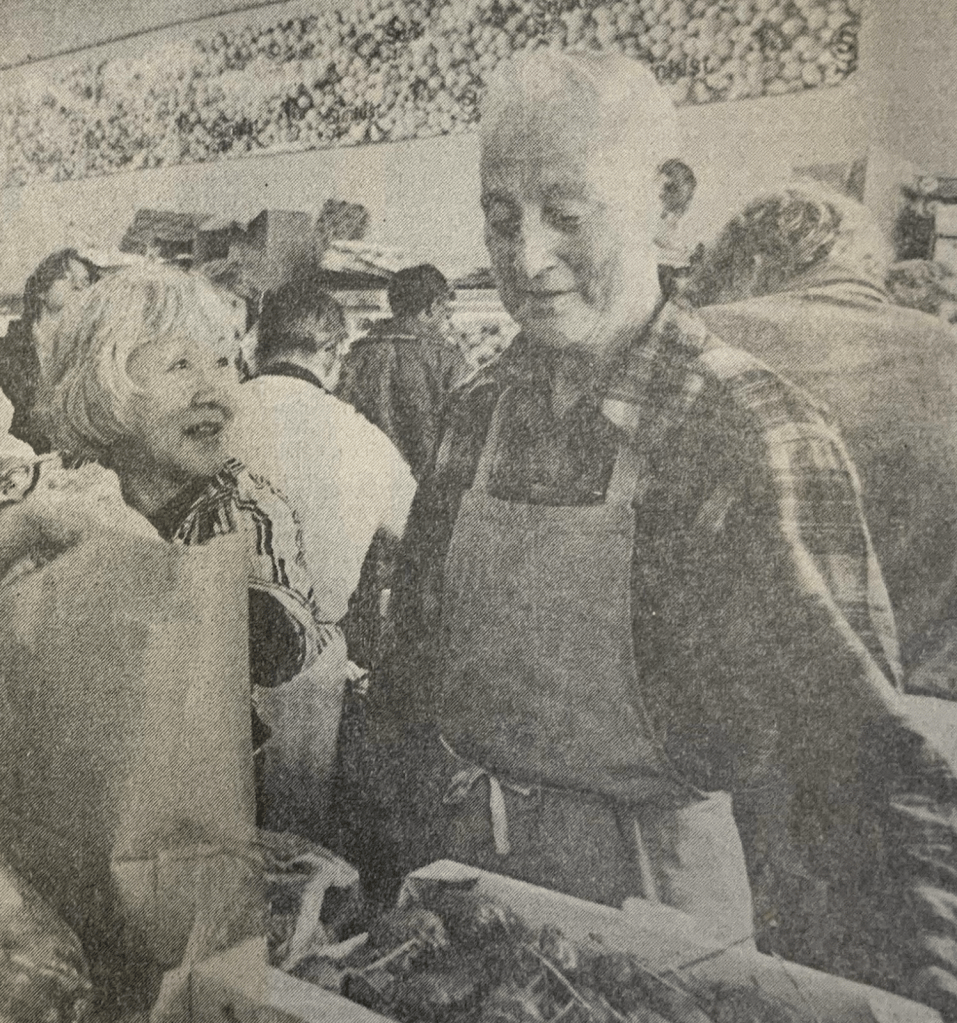
That connection would in 1954 lead Tom to open Acme Market at 9th and Washington streets in Oakland. Later, Tom and Tay joined George Nobori at Chimes Market on College Ave., before Tay established his own store, U-Save Market, at University Ave. and Grove St. (now Martin Luther King Jr. Way).
In 1957, Tom and Mary (Nobori) Fujimoto established their first fresh grocery market in Berkeley by purchasing Porters Market at 1441 Hopkins Ave. The store was renamed Monterey Foods and built a thriving business selling fresh produce and grocery items in a relatively small (2500 square feet) space. One of the regular customers at that market was a young chef, Alice Waters, who in the 1970s had just opened a new restaurant on Shattuck Ave. called Chez Panisse.

The relationship with Alice and other notable chefs and the changing nature of the food business led Tom in 1981 to purchase the former Louis supermarket building across the street, at 1550 Hopkins St. Together with sons Bill and Ken, the family built a larger space and transformed the business into a leading purveyor of fresh produce featuring high-quality seasonal items and pioneered the practice of purchasing specialty items directly from local small farm producers.
Cooking Revolution: The Rise of Farm to Table
During the emergence of the farm-to-table cooking style of chef-inspired restaurants like Chez Panisse, a young Japanese American, Ron Fujii, whose father, Fred, had long sold fresh produce at Fourth Street Market in Richmond, California, opened a fresh produce market, Produce Center, on the corner of Shattuck Ave. and Vine St.
Coincident with the appearance of fresh produce stores in Berkeley was the growth of the fresh produce department at the Berkeley Co-op stores. There, Bill Amano was a key figure in buying fresh produce from the Oakland and San Francisco wholesale produce markets, where Japanese Americans who owned and ran many of the largest wholesale distributors had built strong ties with Japanese American–owned lettuce and berry farms from the Salinas and Watsonville area and the central California coast to the tree-fruit and crop-growing regions of Fresno and the Central Valley.
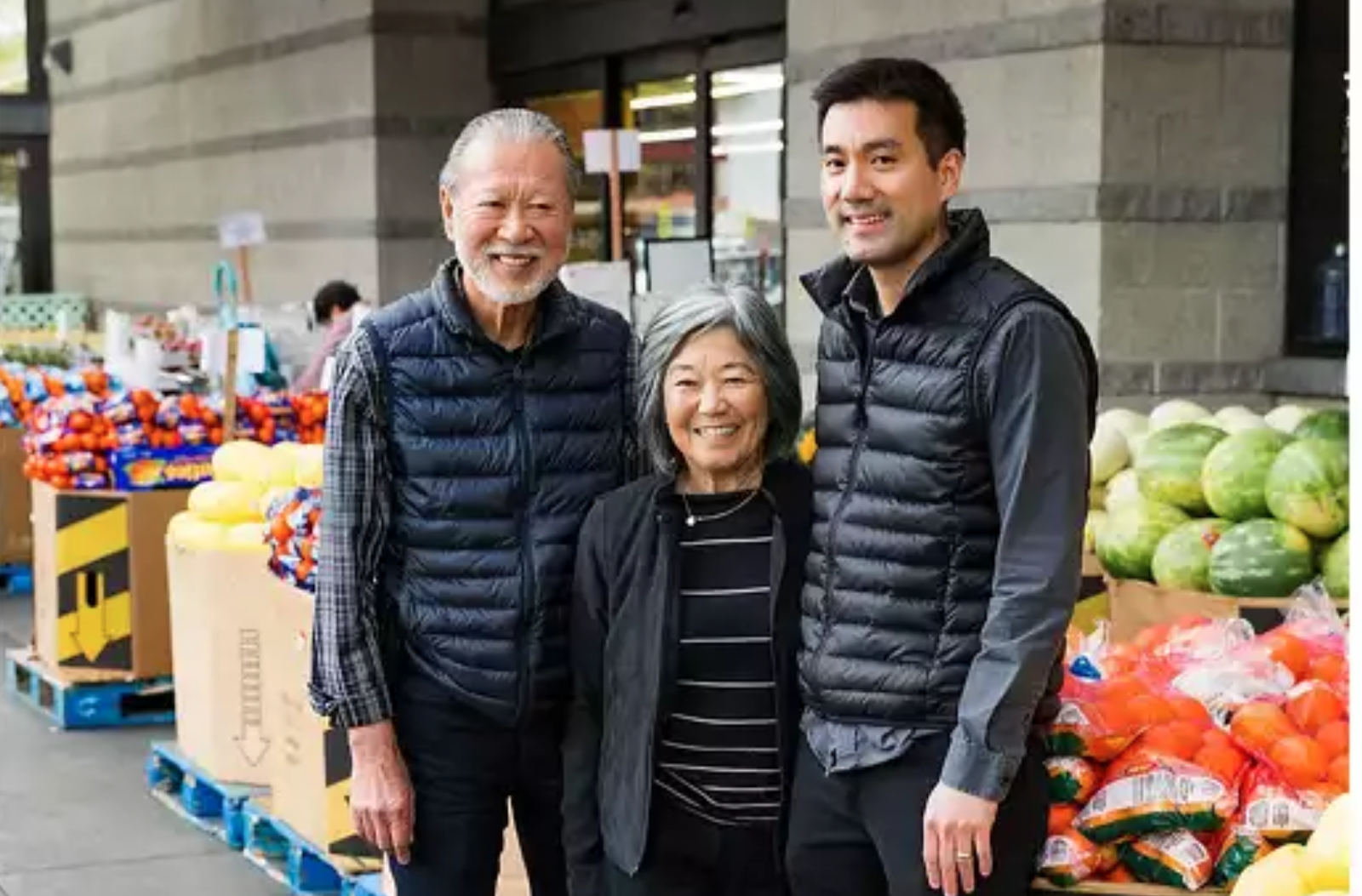
In 1977, Glenn Yasuda and his wife, Diane (Amano) Yasuda, opened the first Berkeley Bowl Market in a former bowling alley on Shattuck Ave. In the market’s early days, Glenn sold fresh produce from wooden fruit stands hand-built inside the cavernous bowling alley space. Over time, Glenn expanded the business, adding fresh fish and meat, then dry goods, and then Japanese packaged food items in the adjoining retail space.

As the business grew, they moved to a former Safeway store on Oregon St. and became a full-line supermarket. Even in his 80s, Glenn made daily 4 a.m. visits to the wholesale produce markets in San Francisco and Oakland (where he had worked prior to founding the store) to select from the daily shipments of fruits and vegetables. In 2009, Glenn and Diane further expanded their business, opening a second store, Berkeley Bowl West, in the former Heinz Ketchup factory space on Heinz St. Glenn passed away in 2020.
Nurseries, Gardeners and Florists
Japanese Americans faced racial discrimination in housing and employment, limiting their ability to secure a steady job. In the Bay Area, Japanese Americans created a thriving landscape of gardening, nursery, and florist work.
Due to the popularity of Japanese gardens in the late nineteenth and early twentieth centuries, Japanese American gardeners were in demand in the Bay Area. Japanese gardens like the Japanese Tea Garden in San Francisco exposed white visitors to the beauty of Japanese landscape design. Japanese immigrants and their descendants were able to use their knowledge and skills in Japanese gardens to their advantage in the United States. Gardening and nursery tending was a way to provide a steady income for their families and in some cases, to stay connected to their heritage.
In South Berkeley, the southwest corner of Oregon and California streets was occupied by a nursery owned by Swiss immigrant Fredrick Abei and managed over several decades by different Japanese American families. In 1924, the property was leased to the Fujii family, headed by two brothers, Kakichi (Fred) and Maruo Fujii. The brothers started out with roses and later specialized in shrubs. The business prospered, and the Fujii brothers were able to support both their families as well as the larger community. In 1926, Maruo Fujii bought land from Mr. Abei and donated it to Higashi Honganji, which was built next to the nursery.

During the Depression, Fred Fujii donated 1,000 Japanese cherry and plum trees to the city of Berkeley, as a goodwill gesture to create work for the unemployed. The trees were planted by the Works Progress Administration along Ashby and near City Hall. When the war began, many of these trees were cut down because of the perceived association with Japan.
When Japanese Americans were removed from Berkeley, those with businesses were forced to quickly liquidate their stock. Many nurseries and gardening businesses sold their plants at bargain prices, advertised in local newspapers. Like other nurseries, the Fujii nursery had a large sale before they left for camp. All that was left was donated to the newly constructed Fort Ord along Highway 1.
In addition to the Fujii nursery, other Japanese American nurseries have included East Bay Nursery, run by the Furuzawa Family; University Nursery managed by the Iwahashi family; Taka Nursery managed by the Takayanagi family; San Pablo Florist & Nursery managed by the Nabeta family; and the Dwight Way Nursery managed by the Sumimoto and Yabusaki families.
Mr. Tomamaru “Ray” Fujii contributed his family history to this section.
 BHSM Online Exhibits